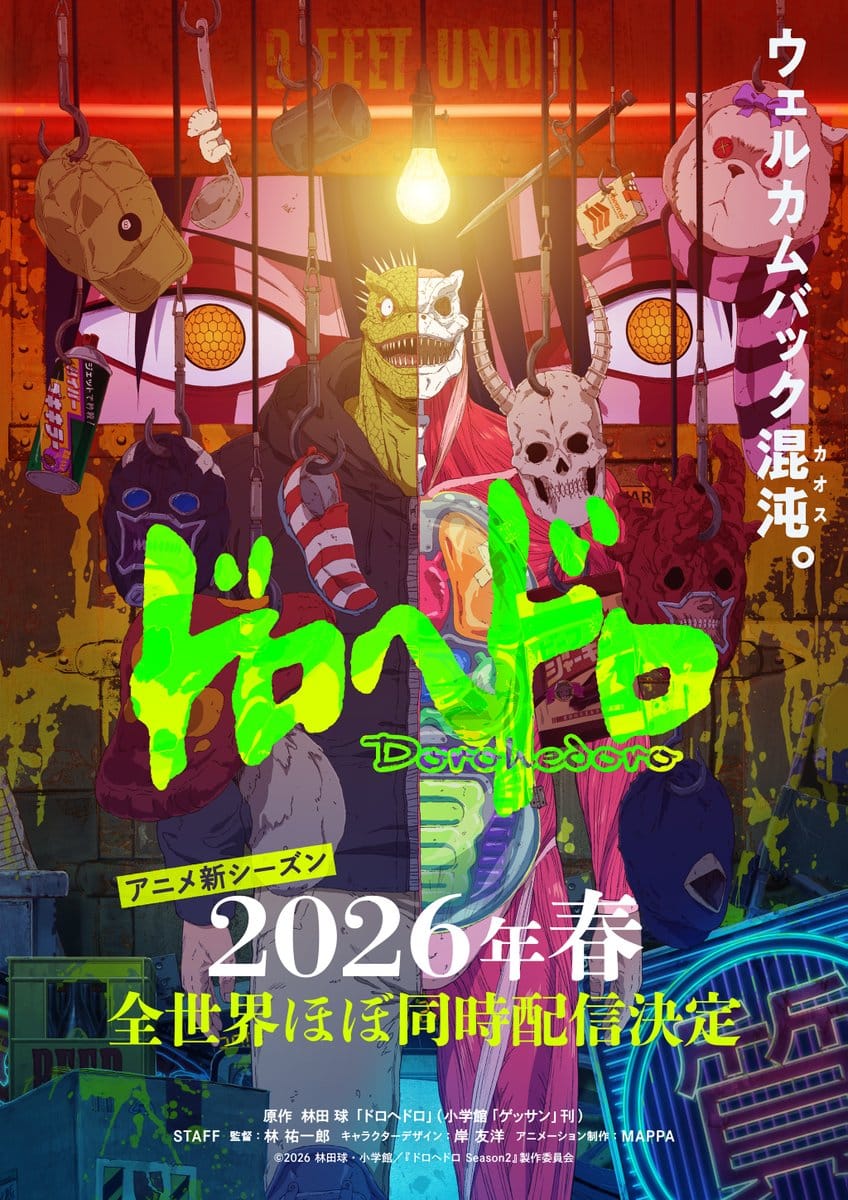
Dorohedoro Season 2 is Here — Why This Underground Masterpiece Deserves Your Attention
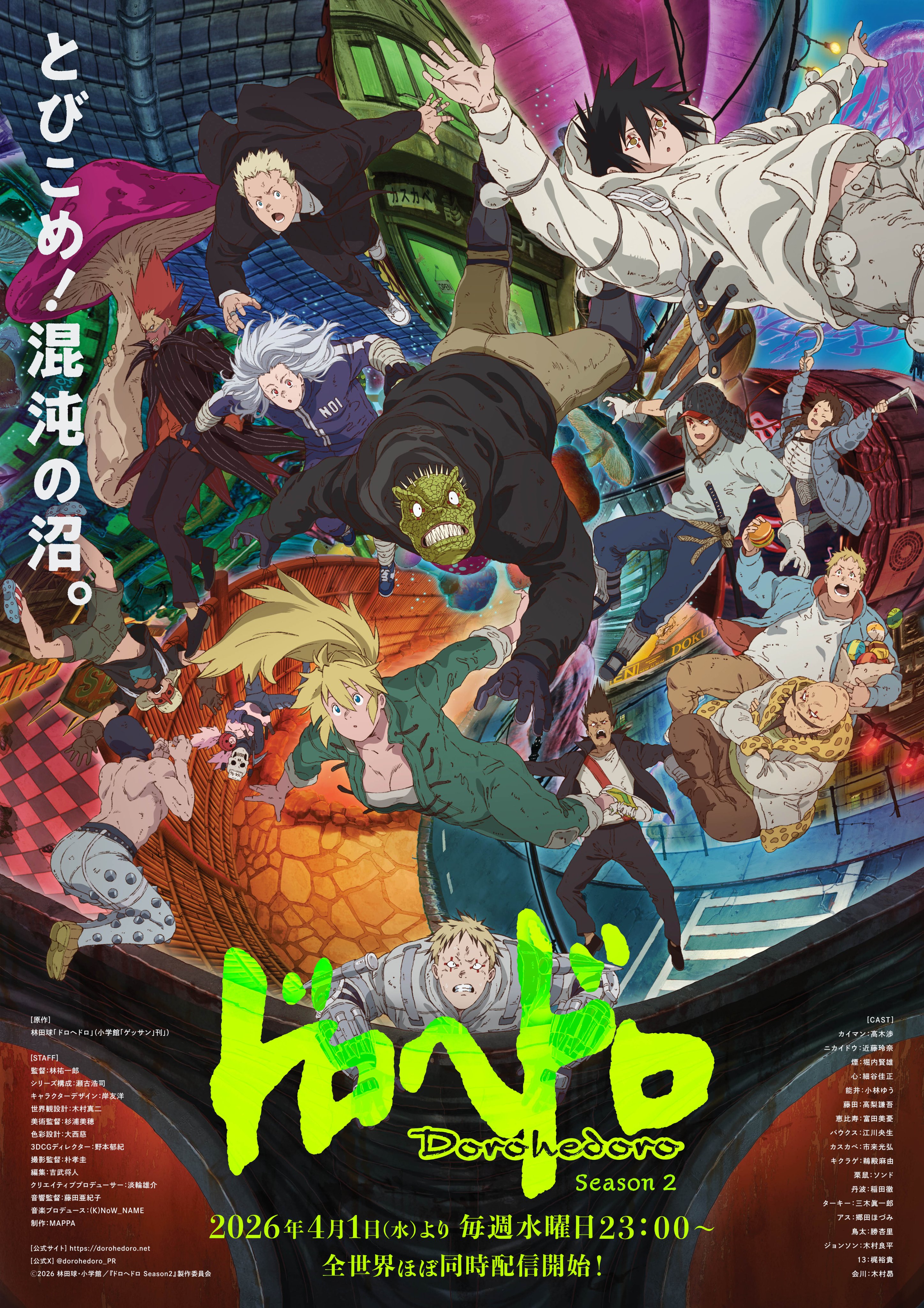
Dorohedoro Season 2 just dropped in April. Good excuse to talk about why this show is so goddamn special.
How I Found It
I first stumbled onto this on Netflix Australia. I was going through a rough patch in life honestly, just needed something to take my mind off things. (Good art hits different when you’re at your lowest.)
Watched the first episode and immediately knew this wasn’t your average anime. Nobody was talking about it. Zero marketing. Completely under the radar.
The thing is, Netflix AU had like… nothing back then. Seven Deadly Sins, Death Note, Samurai Champloo — that was basically it. Slim pickings.
I clicked on Dorohedoro purely because there was nothing else to watch.
Two, three episodes in and I was like, hold on, this is really something. When I rewatched S1 this March to prep for S2, I finally noticed the credits — MAPPA. The studio behind Attack on Titan.
No wonder. This level of production quality costs serious money. Very few shows can pull this off.
Last time I felt something similar was One Punch Man Season 1 — but that was basically a miracle, the entire national team of animators came together because they loved the source material. That kind of thing doesn’t happen twice.
The Writing is Insane
So you start watching and naturally assume Caiman and Nikaido are the protagonists, and En’s crew are the bad guys. Especially when you see Noi and Shin butchering people in the Sorcerer world — first reaction is like, bruh, these people are stone-cold killers. Felt very traditional shounen.
Then I realized I was dead wrong.
Once the show starts peeling back everyone’s backstory, every single character — even the minor ones — is so well fleshed out. The character arcs are genuinely impressive. There are no villains in the traditional sense. Compared to other shows where antagonists are either psychos or pure brainrot, the “villains” in Dorohedoro are lowkey comedic relief.
By the middle of Season 1 you’re fully convinced: no villains here. Just believable, flesh-and-blood people.
The character writing is honestly insane. After S1 I couldn’t help myself — pulled an all-nighter binging the manga.
This is so different from the garbage-tier writing you see everywhere now.
You know the type: “I slapped you because I’m evil.” “You killed my friend so now I must destroy the world.” “I’m the villain because… I want to rule everything?”
That kind of logic makes zero sense. Every character behaves like an NPC in a tutorial level, no real stakes, no actual motivation.
Or it’s the “pure evil” thing — even when there’s a tiny bit of reasoning it still feels juvenile. Like a middle schooler trying to be deep.
Dorohedoro doesn’t do any of that. No preaching. No spoon-feeding. Things just happen — no narrator explaining feelings, no 10-minute inner monologue about justice or whatever. No forced moral lesson. But somehow you walk away changed. Subconsciously.
Every character in this show is driven by different interests, caught up in different conflicts. Everyone feels full. Real. You can clearly understand why someone does what they do — either they have their own reasons, or they got pushed into it.
If you asked me who my favourite character is, honestly, I can’t pick one. And that in itself is kinda wild. No other show has made me feel this way.
Every character’s stance, motivation, and personality are so well-defined that whatever they do in any given situation just… makes sense. You can’t predict the consequences, but because the actions are internally consistent, the whole story becomes absolutely gripping.
The only other show that gave me a similar feeling is Delicious in Dungeon. Every character, nailed.
Art Style
The art has this “subtly creepy” quality — you know that aesthetic that’s trending with younger audiences lately? Not jump-scare horror, just… something slightly off. Dorohedoro nails that vibe and it came out years before the trend. Similar energy to Tsutomu Nihei’s BLAME!
This art style is so much healthier than the standard anime look — big eyes, long legs, everything polished to plastic perfection. (Yeah I like muscular women! Healthy, strong, mommy energy!)
It recalibrates your sense of aesthetics. After years of cookie-cutter anime faces, Dorohedoro feels like a palette cleanser.
This is directly connected to Q Hayashida studying oil painting. She graduated from Tokyo University of the Arts — oil painting major, not manga. Her visual sensibility, color work, composition — it’s fundamentally not from the manga tradition.
More on her later.
Soundtrack
The soundtrack is by (K)NoW_NAME. Absolute top tier. Every single track goes hard. Had to google the name because honestly who can even type that. Their SEO must be suffering lmao.
When something is genuinely good, you can feel the creators’ sincerity.
The ending songs for Season 1 — a different one every episode.
A different song every episode is already wild enough, but they also made completely different MVs for each one. Like what.
Styles range from hip-hop to electronic to jazz. I’ve never seen this in TV anime before.
Episode 5’s ED “D.D.D.D.” — En walking down a corridor in first-person perspective, holding his mushroom.
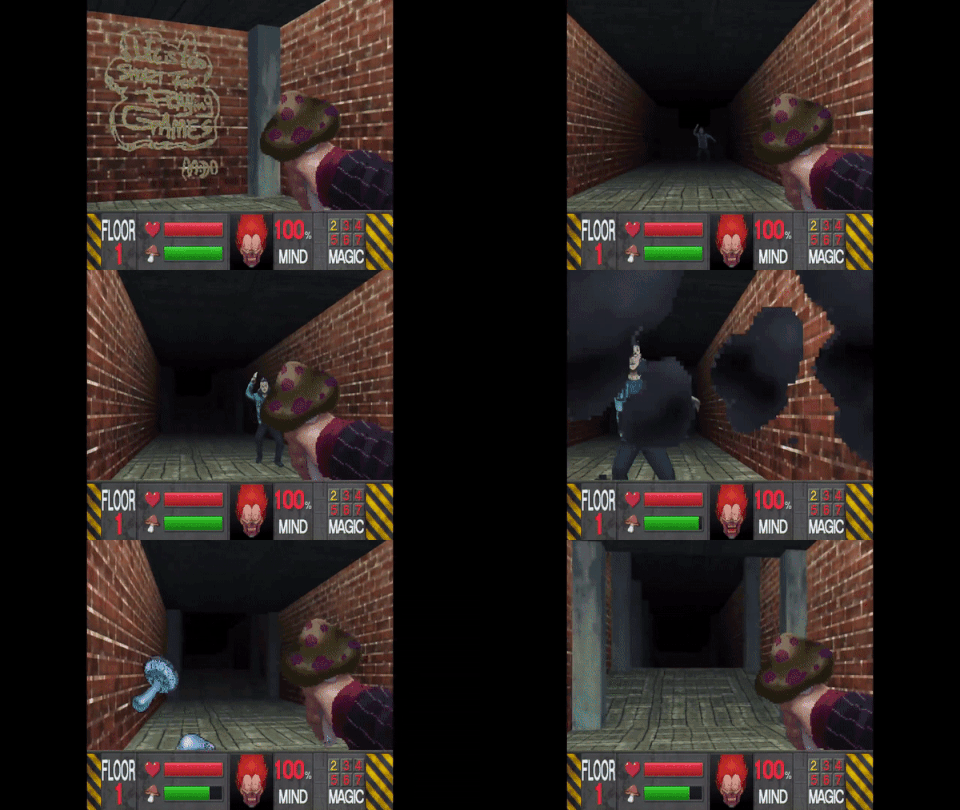
The whole thing is styled after DOOM — that early 90s, low-polygon, FPS shooter aesthetic.
Health bar replaced with mushroom bar, armor value replaced with Mind percentage, turning enemies into mushrooms instead of shooting them. It’s so good that even the Doom fan community was sharing it around.
An anime ending theme that not only changes the song every episode but completely remakes the MV format each time. That level of creative energy is just overflowing. There’s a word for it — aggressively inspiring (complimentary).
Spoiler Warning
The narrative runs three plotlines simultaneously, making this a full-blown ensemble piece:
- Noi / Shin / En’s faction
- Caiman and Nikaido’s side
- The Cross-Eyes and their mystery
Managing three concurrent storylines, constantly interweaving them without losing the audience, while maintaining tight narrative control — that’s incredibly hard to pull off.
Think about it like the opening of Water Margin — Wang Jin beats up Gao Qiu, and you’d never guess the story would unfold into an epic ensemble from there.
Dorohedoro doesn’t reach Water Margin’s scale, but every single thread is quality. The timeline management is pristine.
I ended up reading the entire manga. Can’t remember the specifics of how it ended anymore, just that it was a “wrapping dumplings” kind of finale — everyone found their place.
Honestly the character relationships are complex enough that I’m planning to map them all out on relationmap.io — three storylines, dozens of characters, all the grudges and alliances. Sorting that out before S2 would be a completely different viewing experience. Will share it when it’s done.
The Art of Creation — Real Female Power
Here’s something a lot of people don’t know: Q Hayashida, the creator, is a woman.
And in an age where everyone’s trying to get famous ASAP, she’s mysteriously private to a shocking degree: no social media, no website, no public photos, real name unknown.
There was a photo circulating online claiming to be her — turned out to be actress Natsuki Mari from a Shiseido ad campaign.
She spent 18 years on this manga. 1999 to 2018. How many 18-year stretches does a person get?
I’ve noticed that these unconventional works — not the Weekly Shounen Jump “chosen one” power fantasy stuff, not the endless level-grinding for combat dopamine, not the Demon Slayer approach of force-feeding tragic backstories to every villain —
The works by female creators tend to have less raw combat intensity, but the storytelling is closer to real human experience. More grounded. More empathetic.
Whether a work has genuine human empathy — you can feel it after a while. Some creators treat their characters like puppets or objects. The ones who don’t? Those are the works that stick with you.
Now think about it — all these creators are women:
Q Hayashida — Dorohedoro. Tokyo University of the Arts, oil painting. 18 years to complete the series. Completely anonymous.
Hiromu Arakawa — Fullmetal Alchemist. Farm girl from Hokkaido. FMA is called the “zero bad reviews manga.” 60 million copies. Every character gets their moment to shine.
Rumiko Takahashi — Inuyasha, Ranma 1/2. Called the “pyramid of female mangaka.” Over 100 million copies sold. Inuyasha has combat but doesn’t follow the traditional formula.
CLAMP — X/1999, Cardcaptor Sakura, xxxHolic. Four women. One team. Simultaneously mastering shoujo and dark seinen. X/1999’s apocalyptic ensemble has zero binary good-vs-evil.
Ryoko Kui — Delicious in Dungeon. As intensely private as Q Hayashida. Almost no public information.
These are the real deal. Delicate story construction, meticulous character design, no reliance on combat spectacle. Sure, there’s great combat in some of these works too, but they bring an extra layer of human empathy. That’s what a lot of male-oriented works are missing.
The traditional shounen formula — everyone knows it. Hero levels up, sacrifices an arm or a leg, wins in the end. The fights are exciting but the ending is predictable.
Fist of the North Star, Kengan Ashura, JoJo’s Bizarre Adventure — primarily combat-driven, male characters grinding through enemies, feels like a Korean MMO grind. Take it or leave it.
But when you’re watching Dorohedoro, you genuinely have no idea where the story is going. That’s the most compelling thing about it.
I’m not saying combat is bad. But when a creator truly treats their characters as people instead of plot devices, what comes out is just… different.